
Define the Finish Before Selecting the Product
Tilvanta Ceramics reviews surface finish and glazing requirements for importers, distributors, building-material wholesalers and project buyers. Options are assessed across ceramic floor tiles, ceramic wall tiles, porcelain floor tiles and ceramic mosaic tiles.
Start with the intended application, preferred appearance and product dimensions. We review suitable existing finishes before assessing requests that require development. Availability depends on the selected tile body, design and production route.
A finish description should identify both the desired visual effect and any separate technical requirements.
Compare Matte, Glossy and Textured Surfaces
Matte, satin and glossy descriptions help establish the appearance direction, but names alone are not enough for approval. Share a physical reference where possible and identify the preferred reflection, surface smoothness and texture.
For textured products, confirm whether the requirement concerns a printed visual effect, a physical relief or both. A stone-look pattern can appear on a smooth surface, while a textured tile may have a different appearance under angled lighting.
Polished and glossy glazed finishes should also be identified separately. We confirm the available surface treatment for the selected product rather than treating these descriptions as interchangeable.
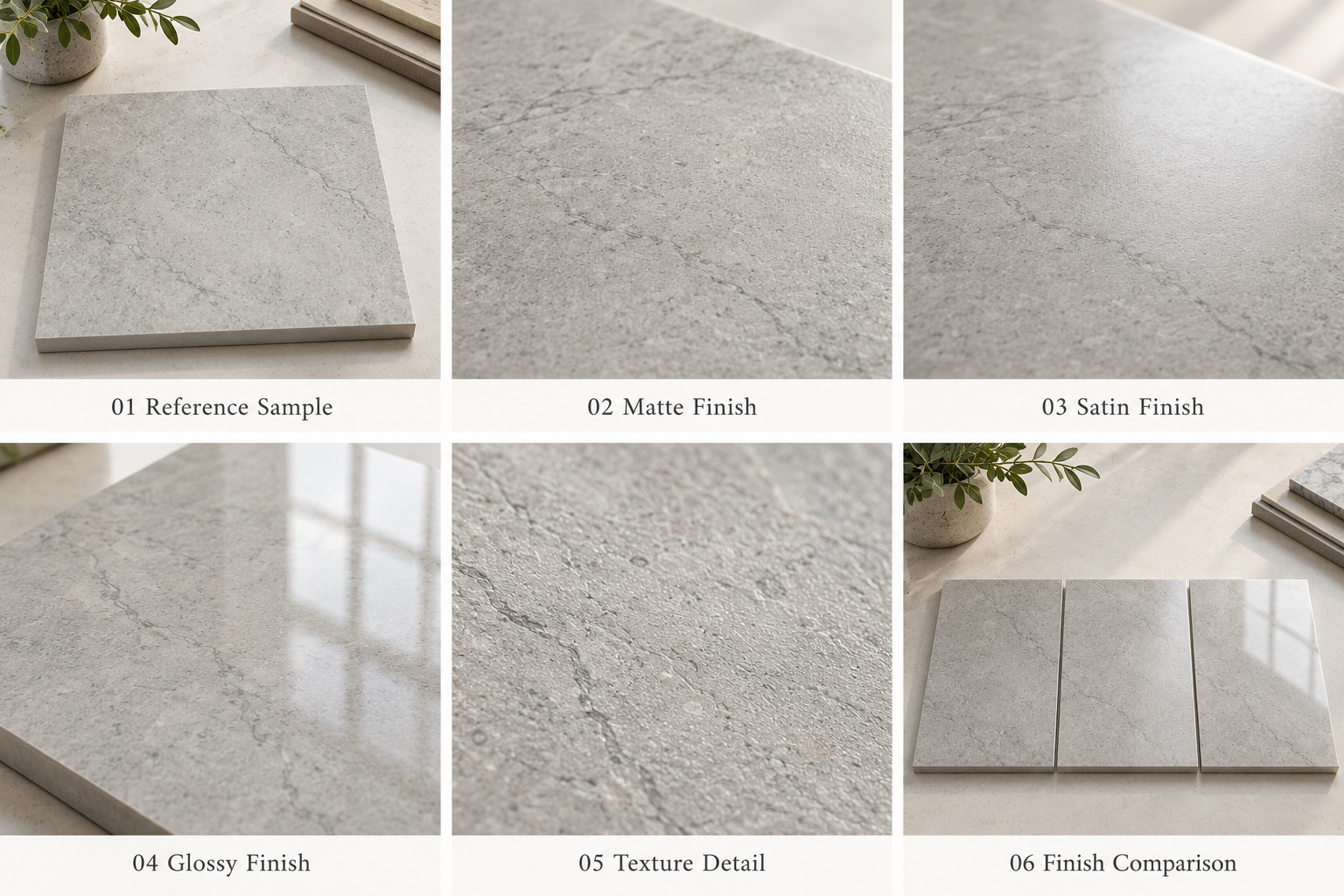 Review Glazing with the Body and Decoration
The selected glaze must be considered together with the tile body, color, pattern and firing route. A finish offered on one collection may not be available on another size or body.
Provide the requested surface reference alongside your design brief. Through glazing and digital inkjet printing, the applicable decoration route can be reviewed for the chosen product.
Changes to glaze appearance may affect how colors, fine markings and texture are perceived. Confirm the combined result on a physical tile rather than approving the pattern and finish independently.
Approve Samples under Agreed Viewing Conditions
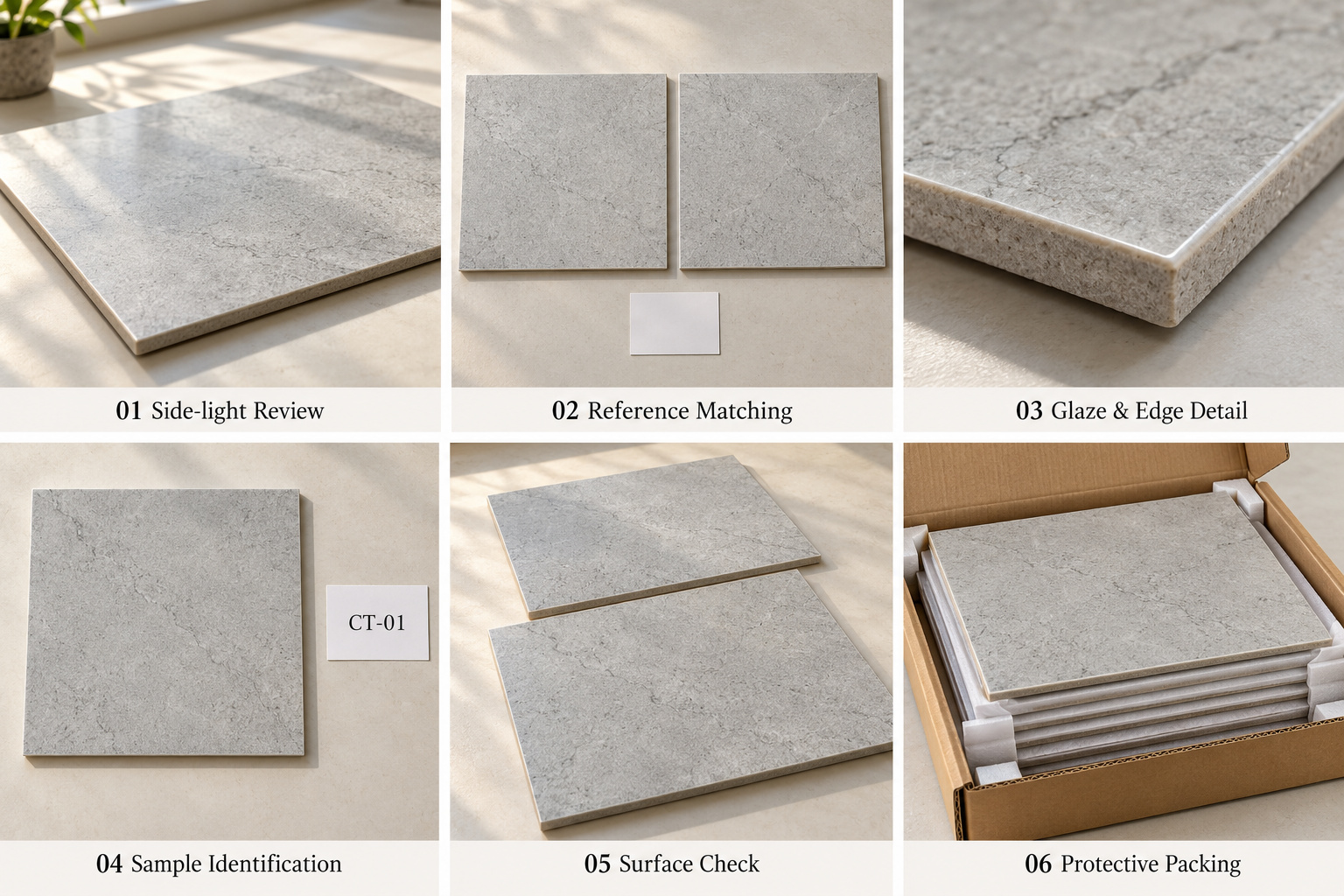
Review samples under consistent lighting and compare them from more than one angle. Gloss, relief and surface markings can look different when viewed directly or under light from the side.
Our sample development and approval process connects the selected finish with a product reference and written specifications. For intentionally varied surfaces, several representative pieces may be needed.
Standard sample preparation typically takes 5–10 working days. New glaze effects or finish adjustments require separate confirmation of feasibility, development cost and timing.
 Separate Appearance Approval from Performance Requirements
A matte or textured appearance does not by itself establish slip resistance. Likewise, a glossy surface does not confirm wear resistance or suitability for every floor application.
Include required performance values, test methods and documentation in the purchasing brief. We check available information for the specific product; appearance approval cannot replace required testing.
Agreed production checks may address visible glaze defects, surface appearance, shade and consistency with the approved reference. The scope of tile sorting and production inspection is confirmed against the order requirements.
Confirm MOQ, Packing and Production Timing
For standard tiles, the typical planning MOQ is around 300–500 m² per design. Special finishes may involve different quantities or additional development.
Mass production typically takes around 25–40 days after order details and any required sample are approved. Packing protection is reviewed for the selected surface, including interleaves or other protective materials where appropriate.
Send tile type, dimensions, finish reference, intended application, quantity per design and destination. Add any technical requirements so the quotation can distinguish available finishes, development work and packing arrangements.