
Confirming the Tile Format Before Forming
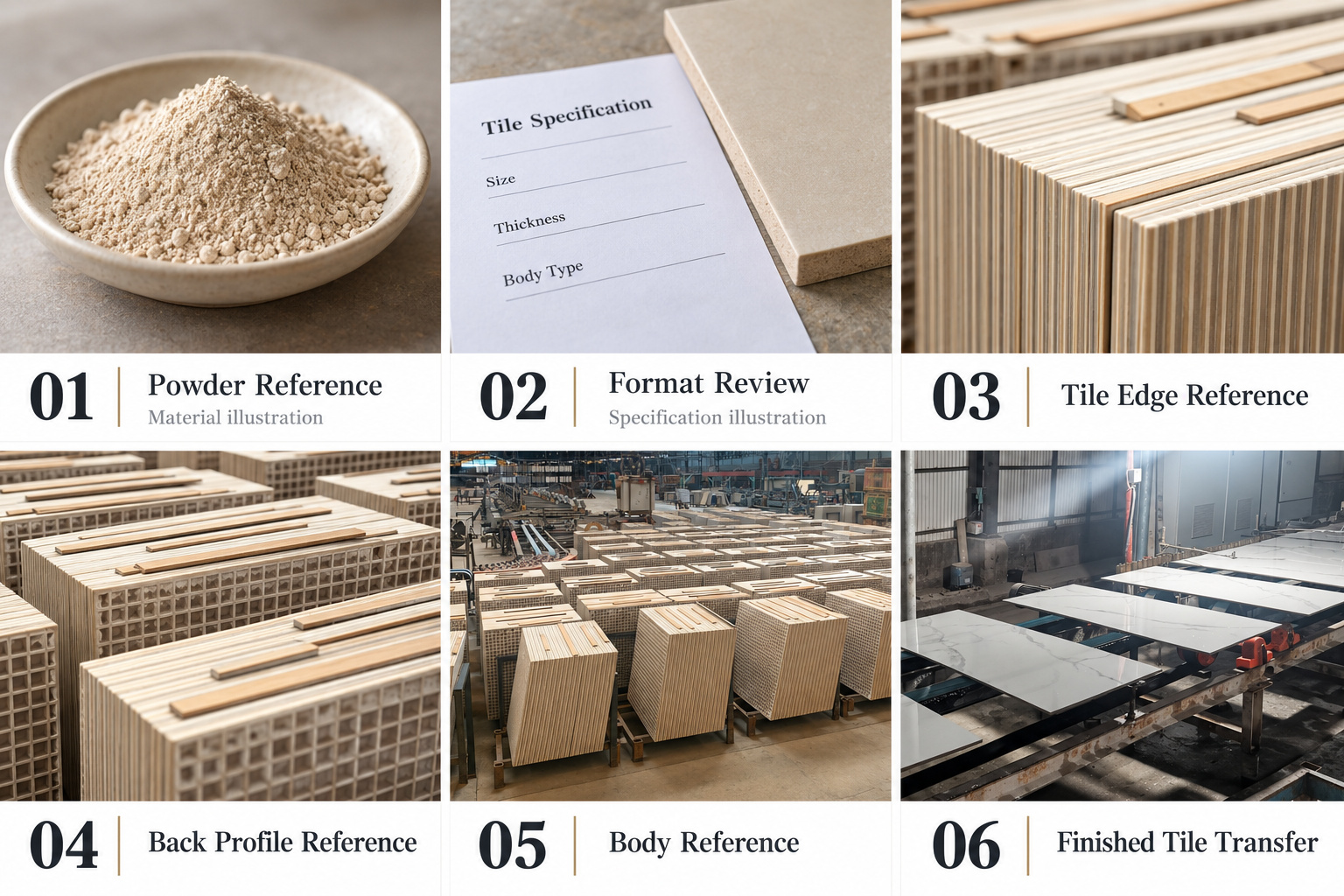
Pressing and forming establish the initial shape, thickness and structure of a tile body before drying and firing. For importers, distributors and project buyers, the key decision is whether the requested format can use an existing production specification or needs further development.
We review the tile category, intended application, target dimensions and thickness together. Ceramic wall tiles, ceramic floor tiles and porcelain floor tiles may require different body formulations and forming conditions. Mosaic production also depends on whether the selected pieces are individually formed or cut from larger fired tiles.
Preparing Powder for Consistent Pressing
For dry-pressed tiles, prepared ceramic powder fills the mould before compaction. Powder moisture, granule characteristics and even distribution influence how consistently the body forms.
Uneven filling can contribute to thickness variation or weak areas in the unfired tile. Pressing conditions must suit the selected body and format rather than follow one setting for every product.
The connection with ceramic raw material preparation matters when reviewing a material change. A different body may require adjustments before the requested dimensions can be confirmed.
 Reviewing Moulds, Thickness and Back Profiles
Available moulds help determine which sizes and shapes are practical for an order. A new format, unusual thickness or specific back profile may require tooling review, development costs and a different minimum production quantity.
The mould dimensions are not necessarily the finished tile dimensions because drying and firing cause shrinkage. Rectified products may also undergo edge processing after firing.
When discussing tile sizes and thickness options, specify the required finished measurements and any relevant tolerances. A photograph or nominal size alone does not define an acceptable dimensional range.
Handling and Drying the Formed Body
An unfired tile is more vulnerable to damage than the finished product. Transfer and drying conditions need to suit its dimensions and thickness to reduce handling damage and uneven drying.
Forming checks can include body integrity, edge condition, thickness consistency and visible cracks or laminations. Some problems become apparent only after subsequent processing, so a satisfactory pressed shape does not replace finished product inspection.
These considerations are particularly relevant when developing larger formats or changing the thickness of an existing range.
 Approving Samples and Production Requirements
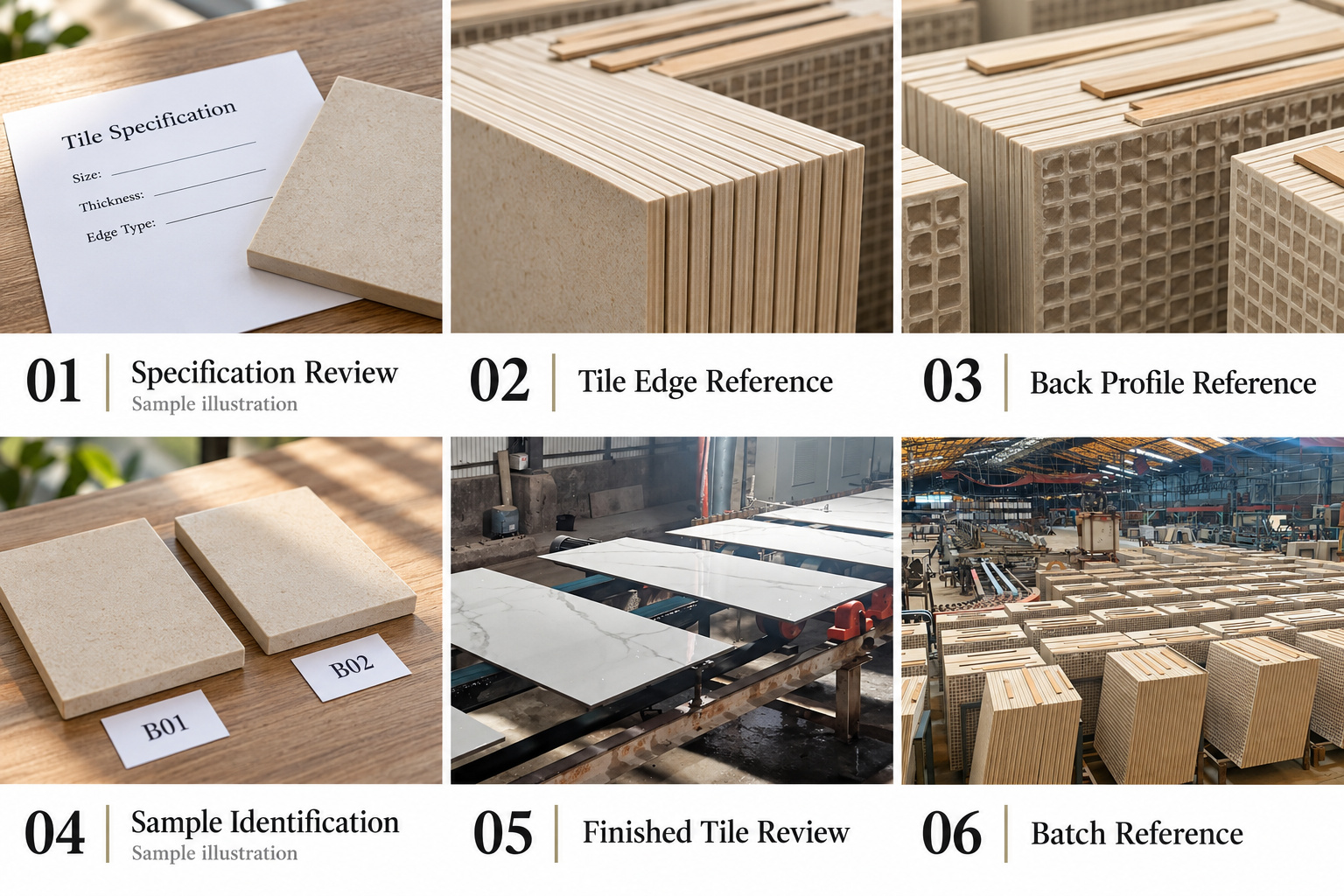
For a development order, sample review should cover the finished tile after the applicable firing and finishing stages. Buyers should confirm dimensions, thickness, edge type and appearance against the agreed specification.
A small cut sample can help assess the surface, but it cannot demonstrate the flatness or dimensional consistency of a full-size tile. Where these points are critical, include full-size sample requirements in the sample development and approval plan.
Request a Forming Feasibility Review
Send the tile type, finished size, thickness, quantity and destination market, together with drawings or reference samples where available. Identify any unusual shape, back profile or dimensional requirement.
We can then review available options, tooling needs, sample arrangements, MOQ and production timing. Packing quantities and protective packaging should be confirmed against the finished format and weight before shipping arrangements are finalised.