
Matching the Tile Body to Your Order
Raw material preparation establishes the body used for ceramic wall tiles, ceramic floor tiles, porcelain floor tiles and ceramic mosaics. The appropriate formulation depends on the selected product, its intended application and the agreed specifications.
For importers, distributors and project buyers, this stage starts with confirming the tile type. Similar surface designs can be available on different bodies, so appearance alone is insufficient for product selection. We review the required application, dimensions, thickness and relevant technical requirements before confirming a suitable option.
Our tile body and material options page explains the product differences to discuss when preparing an enquiry.
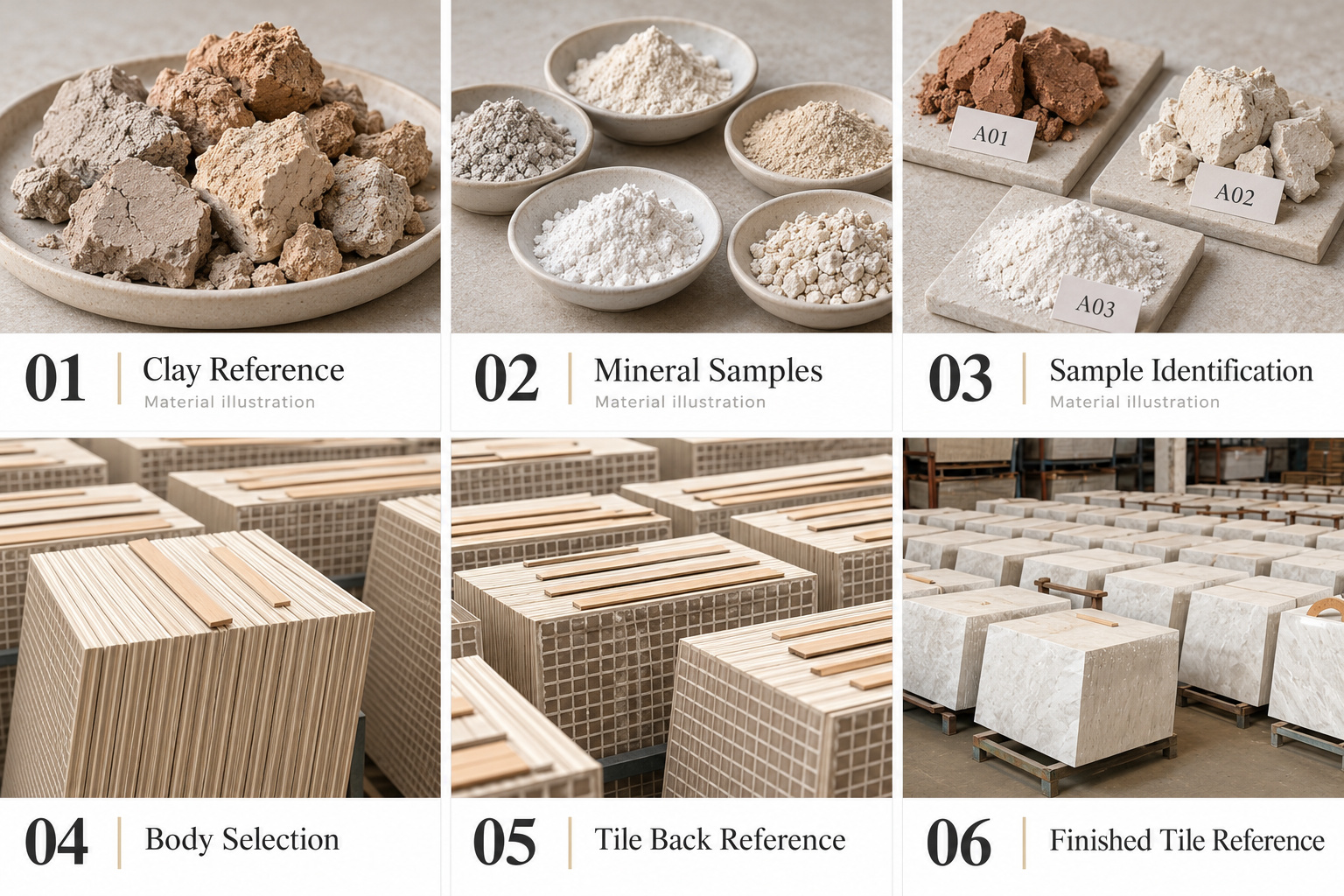 Selecting and Checking Raw Materials
Ceramic tile bodies commonly use combinations of clay, kaolin, feldspar, silica and other materials appropriate to the formulation. Their proportions vary between products and should not be presented as one universal recipe.
Preparation checks focus on material identity, visible contamination and consistency against the approved formulation. Moisture and particle characteristics can also affect subsequent processing.
A pale body does not automatically indicate better performance, and body colour cannot establish water absorption or strength. Where a purchase specification requires particular properties, these should be supported by applicable product information or testing rather than visual assumptions.
Weighing, Blending and Particle Preparation
Materials are weighed according to the selected formulation and blended to reduce uneven distribution. Milling and screening requirements depend on the production route. For a wet preparation route, materials are milled into slurry, with screening and magnetic separation used where applicable.
Inconsistent preparation can contribute to forming difficulties or variation during firing. Buyers requesting a different body or thickness should therefore allow for a feasibility review rather than assuming an existing design can move directly into production.
The quotation should distinguish an available body option from a request that needs development.
Preparing Material for Forming
For dry-pressed tiles produced through a wet preparation route, prepared slurry is typically spray-dried into granulated powder. Powder moisture and granule characteristics influence mould filling and pressing consistency.
Other forming routes require different preparation conditions. The selected tile determines which route applies; the same equipment or preparation sequence should not be assumed for every product.
This stage connects directly with tile pressing and forming, where the prepared material takes shape before drying and firing.
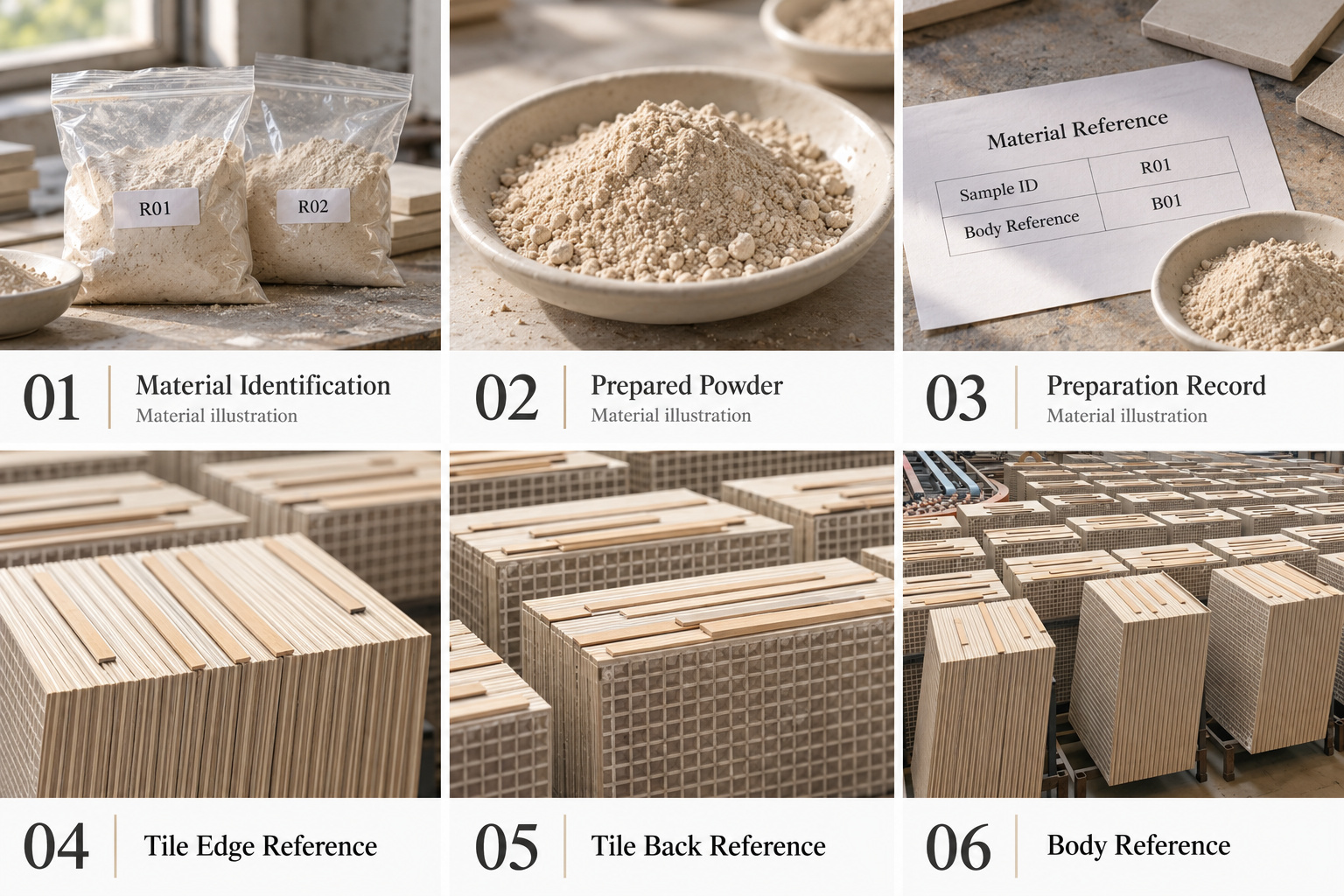 Confirming Samples Before Production
A body change can affect firing shrinkage, finished dimensions and the appearance of the applied glaze. A reference sample helps define the target, but matching its surface does not establish that the underlying body is equivalent.
During sample development and approval, the sample identification, tile type, thickness and surface requirements should be recorded together. Any agreed revision needs to carry through to the production specification.
Sample preparation time and bulk production lead time are confirmed against the selected product and development work required.
Information Needed for a Material Review
Send the tile category, intended application, target size and thickness, finish, estimated quantity and destination market. Include a reference sample or specification sheet where available.
Please identify any mandatory water absorption, strength or other product requirements at the enquiry stage. We can then review the available body options, sample needs, MOQ and production schedule. Packaging and shipping requirements should also be confirmed for the finished tile, since dimensions, weight and order quantity affect packing arrangements.