
Setting the Inspection Requirements
Tile sorting separates finished products according to the agreed dimensions, appearance and order requirements. For importers, distributors and project buyers, this stage helps establish which tiles can be packed together and how cartons should be identified.
We review the selected tile category, size, thickness, finish and reference sample before confirming inspection requirements. Ceramic wall tiles, ceramic floor tiles, porcelain floor tiles and mosaics need checks appropriate to their construction. Acceptance criteria should be agreed before production rather than decided from shipment photographs alone.
Checking Dimensions, Flatness and Edges
Dimensional inspection can include length, width, thickness, squareness and surface flatness, using the agreed methods and tolerances. Nominal dimensions should be distinguished from the actual working size supplied.
Rectified and non-rectified products require clear identification. Tiles intended for coordinated layouts also need compatible dimensions across the selected formats. Our tile sizes and thickness options page explains the information to confirm.
Edge and corner checks look for chips, cracks and processing damage. For mosaics, the review may also cover individual piece dimensions, spacing, sheet alignment and mounting condition.
 Sorting Shade and Size Groups
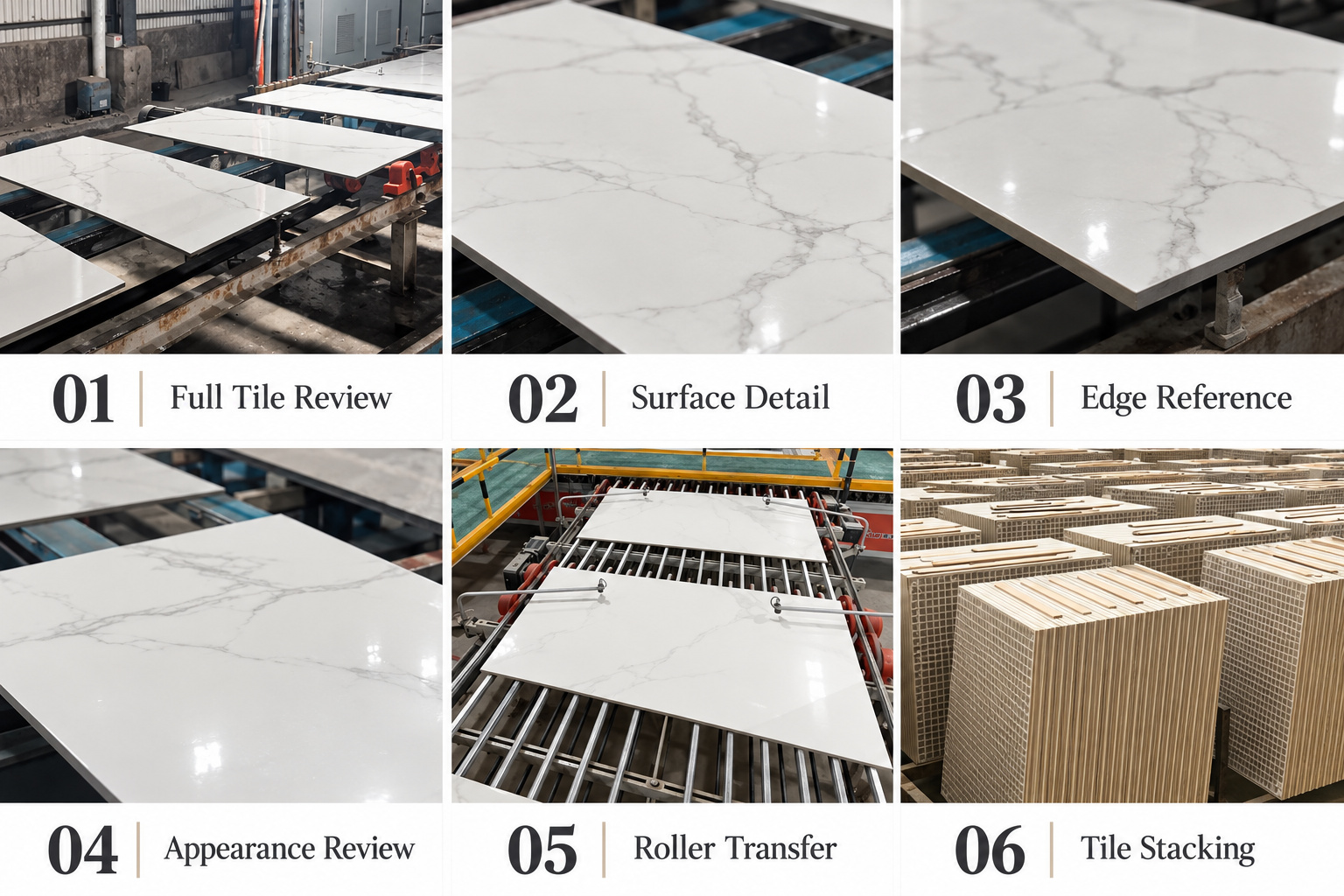
Tiles from one design can show variation in shade and finished dimensions. Where shade or calibre groups apply, sorting and carton identification help buyers manage those differences during distribution and installation.
Natural-looking patterns may intentionally contain several faces. Inspection should distinguish approved design variation from an unwanted colour shift or printing defect.
For projects with adjoining areas, tell us whether the quantity must come from one identified production batch. Repeat orders should include previous carton details and sample references, although a separate batch should not be assumed to match exactly.
Reviewing Surfaces Against the Reference
Surface inspection considers the accepted colour range, pattern, finish and visible defects. Relevant issues can include scratches, pinholes, glaze irregularities, missing print, unwanted lines and uneven sheen.
Viewing conditions matter. An angled view can reveal surface marks that are difficult to see in a straight-on photograph. Inspection should follow agreed conditions rather than treating every difference visible under extreme lighting as a rejection.
The approved reference from sample development and approval should remain identifiable and protected. If a discrepancy appears, the affected quantity and proposed handling need review before shipment release.
Checking Cartons, Labels and Packing
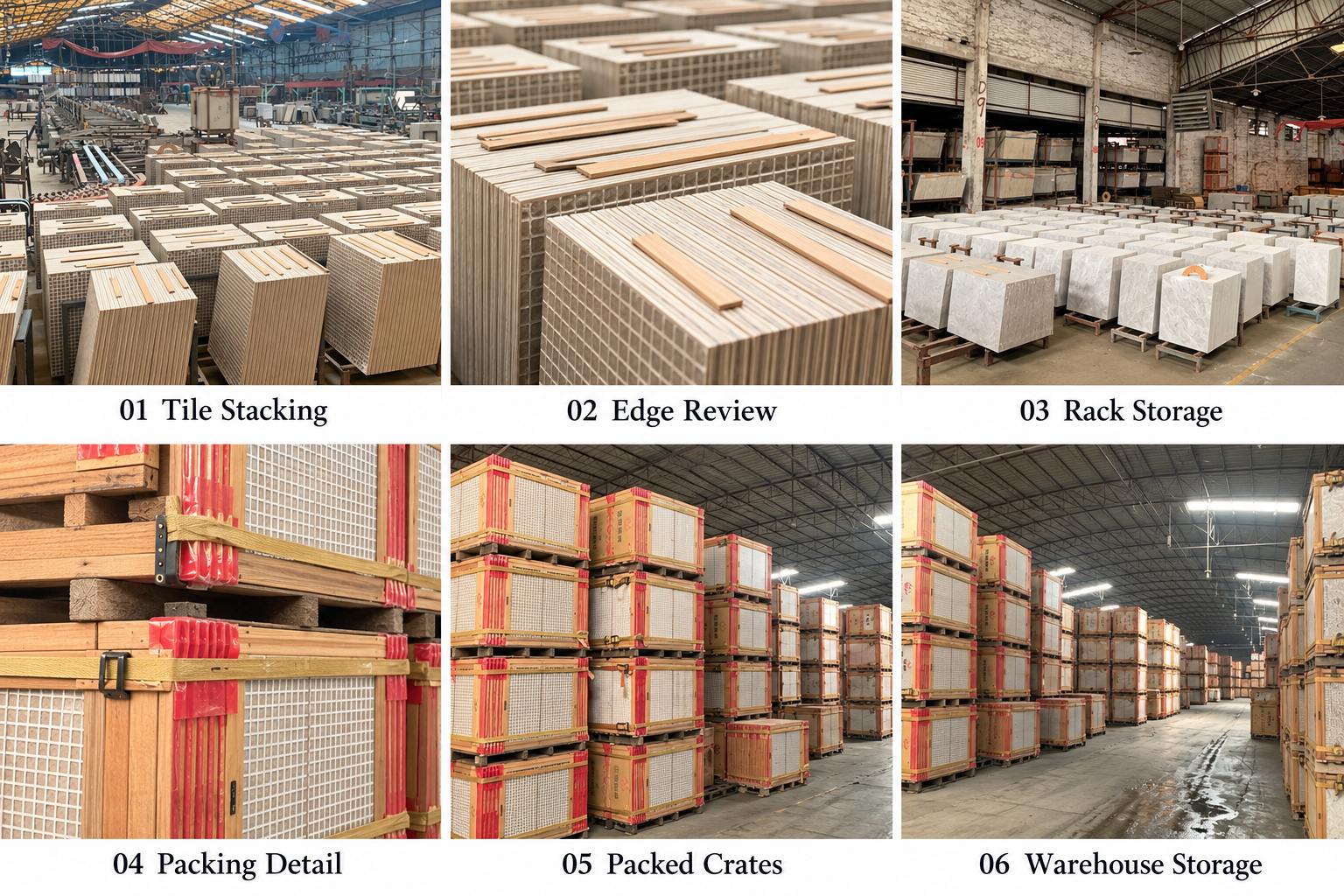
Packing checks connect the inspected product with the purchase order. Review points include product identification, size, finish, pieces per carton, area coverage and any agreed shade, calibre or batch information.
Carton printing and labels should match the approved artwork. For branded orders, OEM and private label packaging requirements need confirmation before packing begins.
Protective materials, carton condition, pallet arrangement and shipping marks also require review. Package counts and packing-list quantities should be reconciled before dispatch.
 Agreeing Inspection Scope Before Shipment
Visual and dimensional checks do not replace product-specific performance testing. Any required water absorption, strength or other testing should be identified when the order is reviewed.
If you require a third-party inspection, provide the checklist, sampling requirements and booking arrangements early so access and timing can be confirmed.
Send your tile specification, quantity, destination market and acceptance requirements with the enquiry. We can then review inspection scope, sample references, production timing and packing details before shipment preparation.