
Confirming the Product Before Firing
Kiln firing develops the ceramic body and establishes the fired appearance of the selected glaze and decoration. For importers, distributors and project buyers, the relevant outcome is a finished tile that meets the agreed specification.
The firing conditions must suit the tile body, dimensions, thickness and surface system. Ceramic wall tiles and porcelain floor tiles should not be treated as interchangeable products simply because they carry a similar design.
We review the selected product and reference sample before confirming production requirements. Requests involving a different body, thickness or glaze may need further development.
Preparing Tiles for the Firing Route
Before entering the kiln, tiles need preparation appropriate to their production route. Drying condition, body integrity and any applied glaze or decoration influence how the tile responds during firing.
Depending on the product, production may use a single firing or a different firing sequence. The applicable route should be confirmed for the selected range rather than described as one universal process.
Requirements established during tile pressing and forming remain relevant here. Uneven bodies or existing damage cannot reliably be corrected by firing.
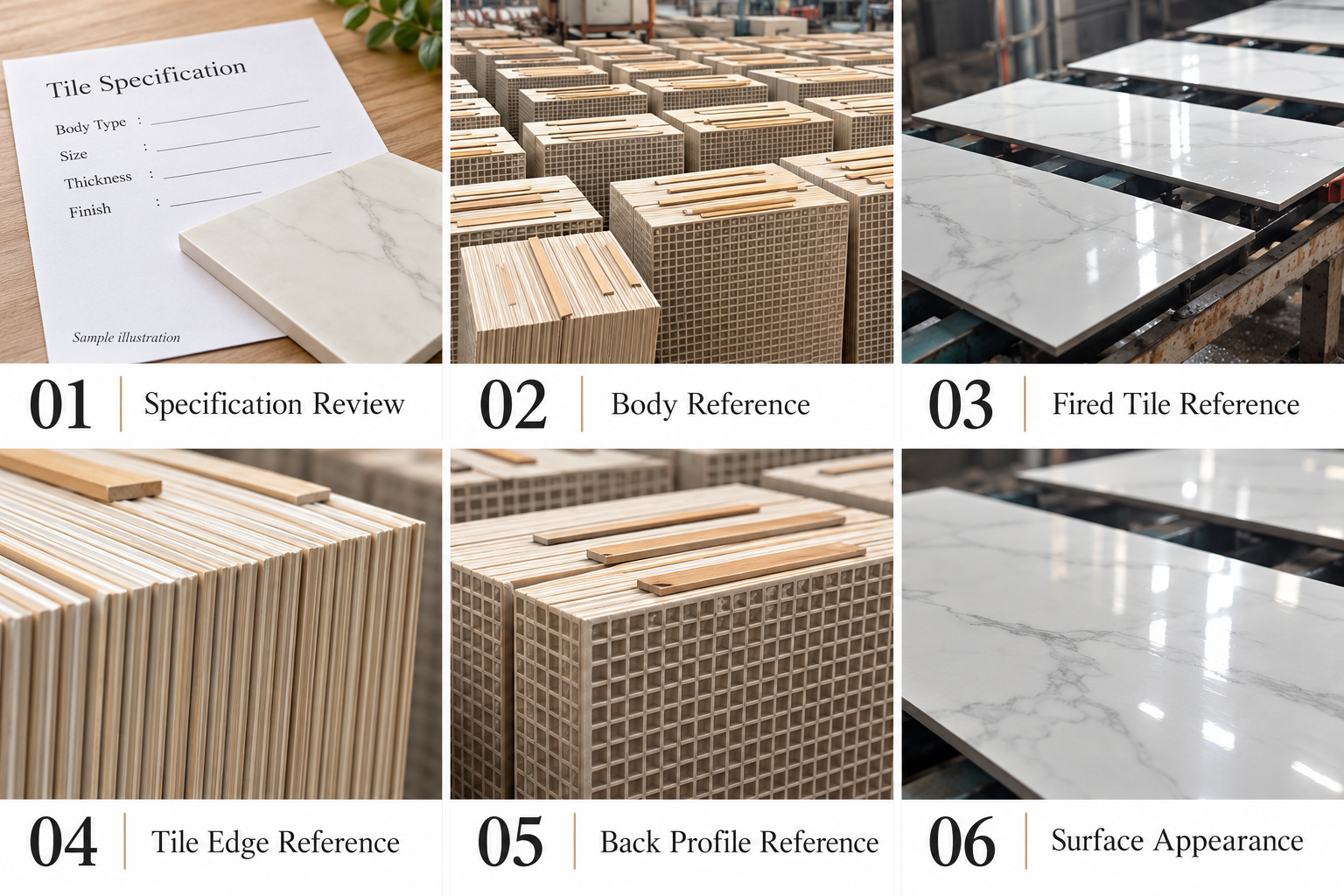 Managing Heating, Firing and Cooling
A firing cycle includes controlled heating, the required firing conditions and cooling. These stages work together to develop the body and surface. Temperature alone does not describe the complete cycle.
The appropriate settings depend on the formulation and product requirements. Changes to the body, thickness or glaze can affect shrinkage, surface appearance and dimensional stability.
Cooling also requires control because uneven temperature changes can contribute to stress or cracking. We do not apply a single advertised temperature or cycle time to every tile category.
Reviewing Dimensions and Surface Results
Firing changes the dimensions of the formed body. Finished size, thickness, flatness and edge condition should therefore be assessed after the relevant production stages. Rectified tiles may undergo additional edge processing after firing.
Surface review considers colour range, glaze appearance, print clarity and visible defects such as pinholes, cracks or deformation. The relationship between decoration and firing is covered further in glazing and digital inkjet printing.
Appearance alone cannot establish water absorption, strength or suitability for a particular application. Where these properties are specified, the applicable product information and testing requirements must be reviewed separately.
Approving Fired Samples and Batch References
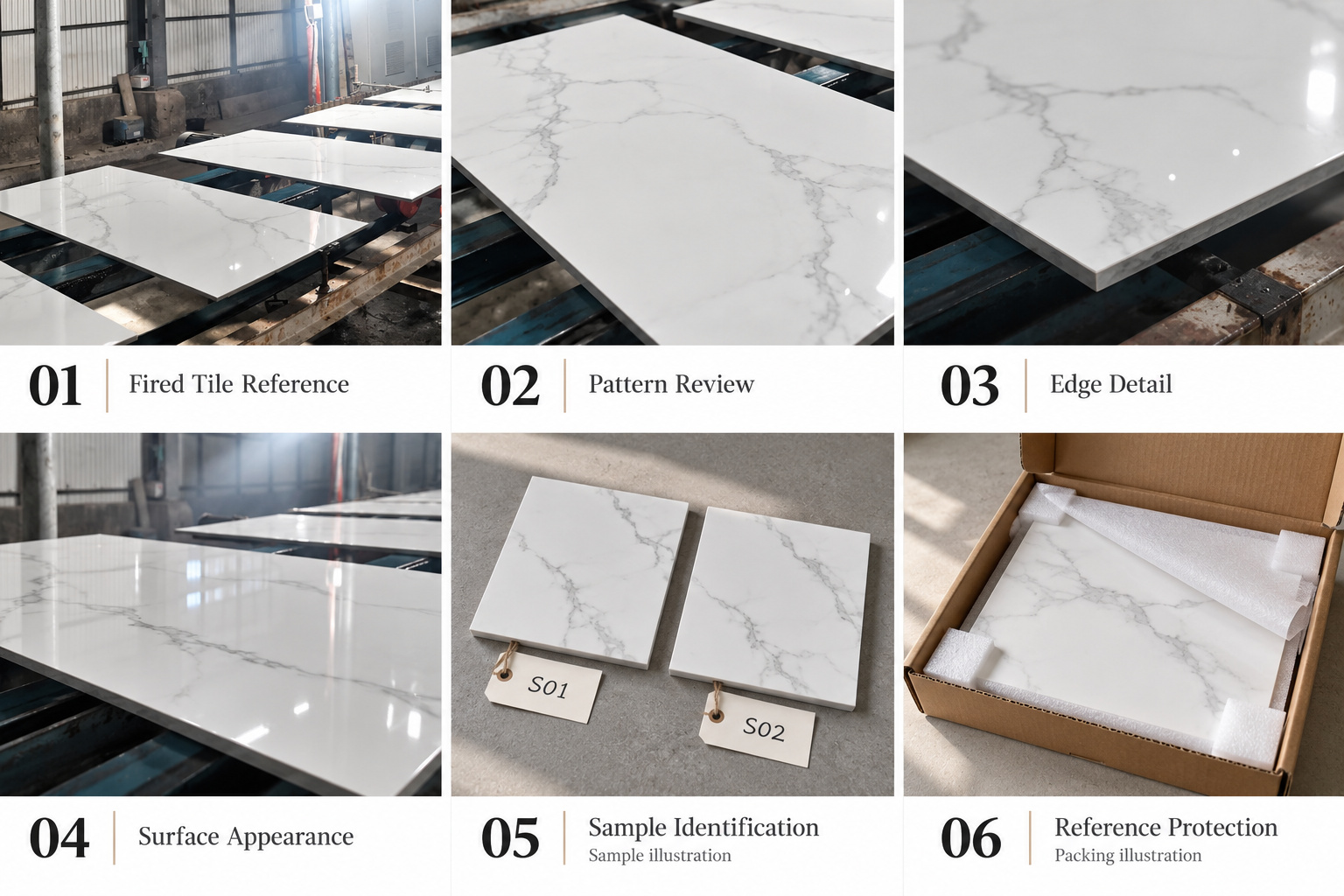
Buyers should approve the finished fired sample with its product identification, dimensions, finish and accepted appearance range recorded together. A small colour sample cannot demonstrate the flatness of a full-size tile.
For repeat orders, provide the previous sample reference and specification. Separate batches may vary, so adjoining project areas and phased deliveries need discussion before scheduling.
The sample development and approval process helps establish which reference applies when production samples are reviewed.
 Planning Your Production Order
Send the tile category, size, thickness, surface requirements, quantity and destination market. Include a physical reference or specification sheet and identify any mandatory technical requirements.
We can then review sample needs, MOQ and production lead time for the selected product. Development and approval requirements should be settled before confirming the schedule. Finished tile weight, format and surface protection also need to be considered when agreeing packaging and shipment arrangements.