
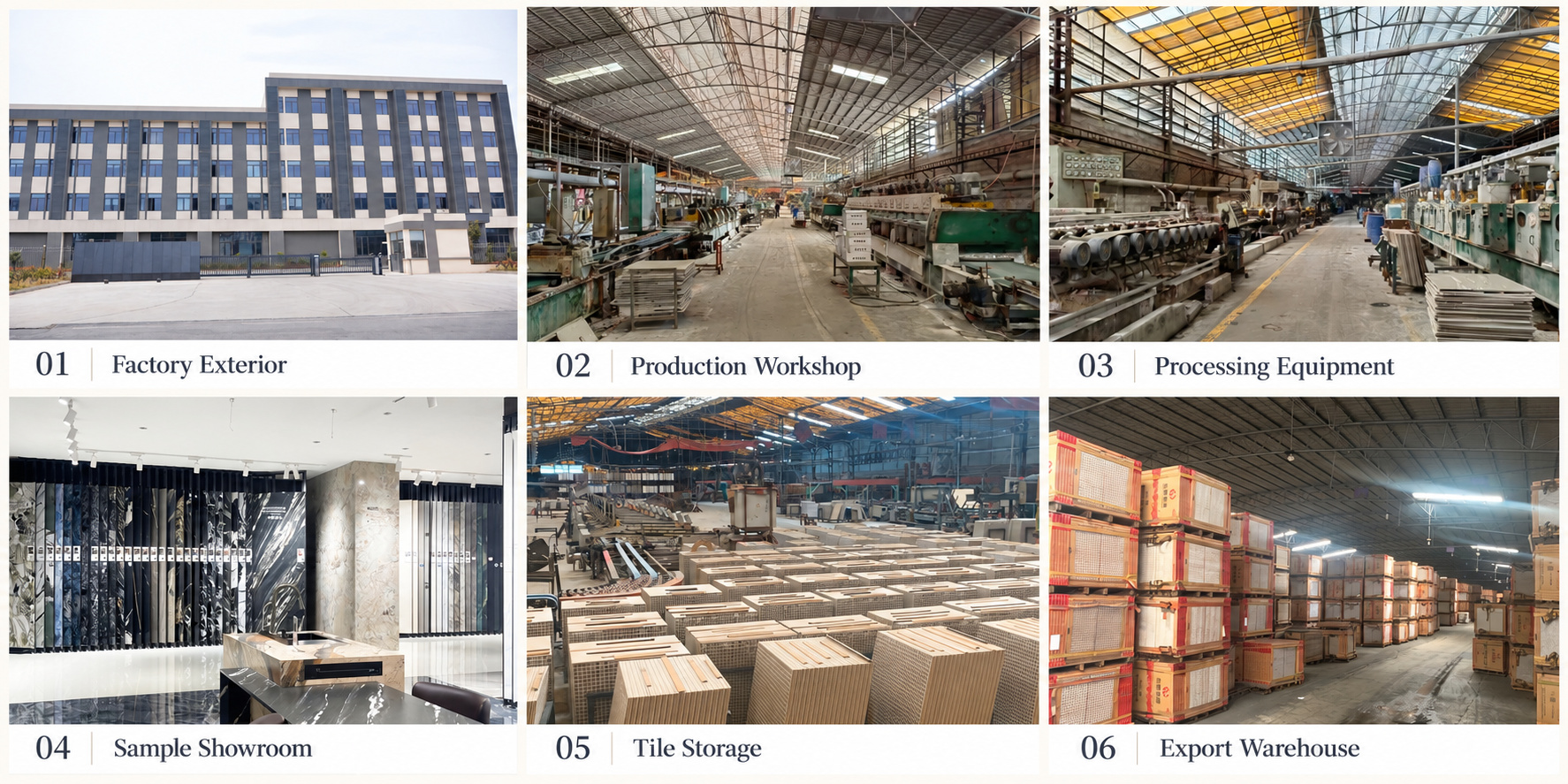
 Production Planned Around the Selected Tile
Tilvanta Ceramics coordinates ceramic tile manufacturing and order preparation for importers, distributors, building-material wholesalers and project buyers. Based in Nanzhuang, Foshan, China, we align product specifications, sample references, inspection requirements and export packing before production is approved.
Our product scope includes ceramic floor tiles, ceramic wall tiles, porcelain floor tiles and ceramic mosaic tiles. The production route depends on the selected body, dimensions, decoration and finish. Not every product passes through the same equipment or finishing stages.
Raw Material Preparation for the Selected Body
Body preparation begins with the formulation required for the product. Materials such as clay, kaolin, feldspar and silica are proportioned and prepared according to the selected ceramic body and process.
Material preparation influences how the body forms and behaves during drying and firing. Buyers should therefore confirm the product type and required characteristics before approving an appearance sample.
Our ceramic raw material preparation page explains this stage in greater detail. Special body formulations require a separate feasibility review and are not assumed to be available for every order.
Forming, Drying and Dimensional Planning
The prepared body is formed using the route appropriate to the selected product. Forming establishes the tile shape and initial dimensions, while subsequent drying and firing affect the finished result.
Requested dimensions must be reviewed together with thickness, edge requirements and the applicable working size. A non-standard format may require changes to forming or finishing arrangements, with consequences for minimum quantities and scheduling.
Before production, the order specification should distinguish nominal dimensions from the working dimensions and tolerances used for inspection. Mosaic piece and sheet requirements also need separate confirmation.
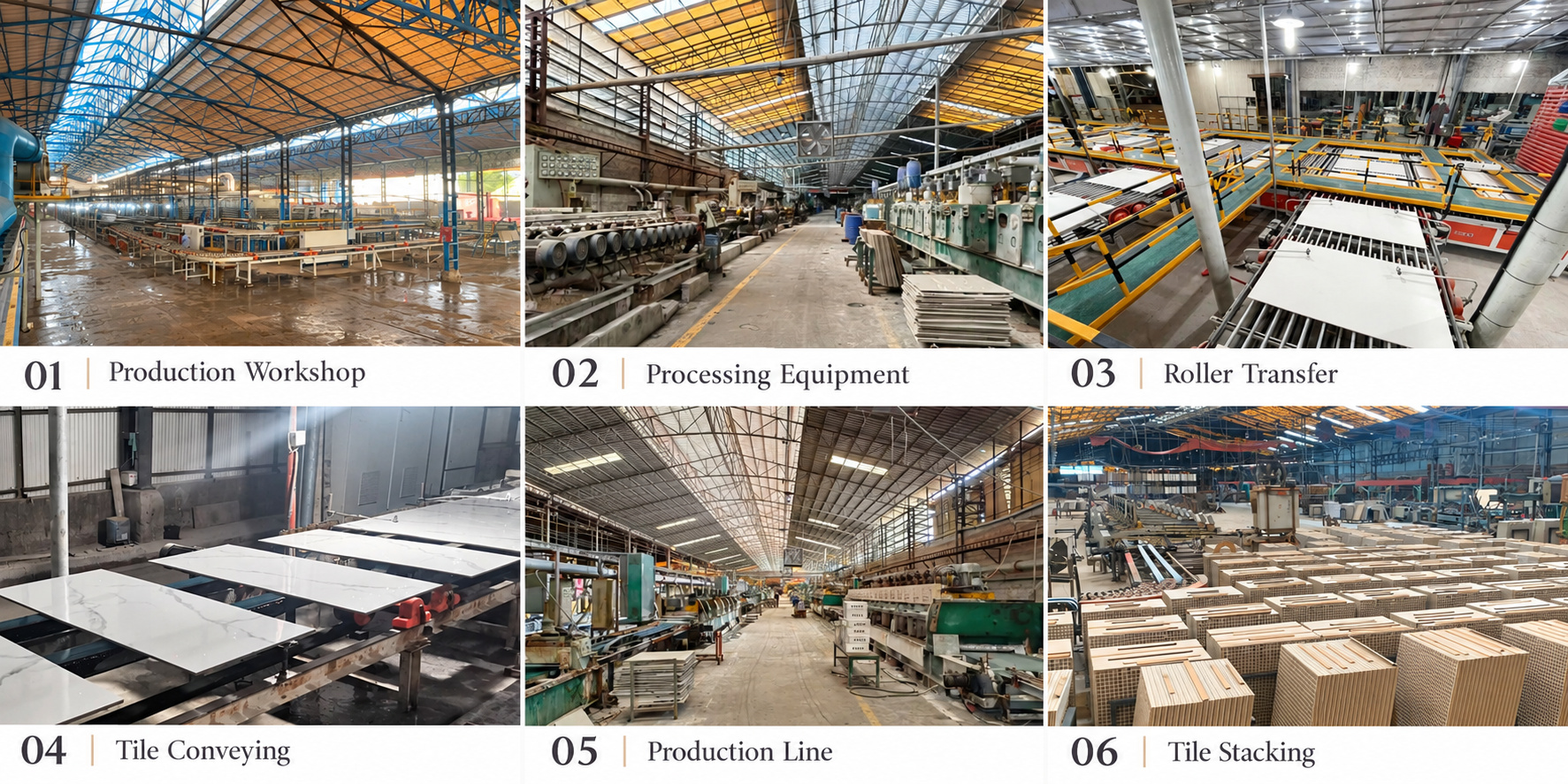 Glazing, Decoration and Surface Development
Where specified, the formed body receives glaze or decoration to establish its color, pattern and surface appearance. Available options depend on the body and production route.
During glazing and digital inkjet printing, the approved design must be considered at the intended tile size. Fine markings, pattern direction and surface reflection can look different on a small sample and a complete tile.
New colors or decorative effects are assessed before development. Final approval should connect the selected appearance with an identifiable sample and written specification.
Firing and Applicable Finishing Stages
Tiles are fired under production conditions suited to their body, size and surface. The resulting product must then be assessed against its agreed requirements rather than judged by appearance alone.
The kiln firing process is part of the route that establishes the finished ceramic body and surface. Specific performance requirements should be stated in the purchasing brief and supported by relevant product documentation where available.
Polishing, edge finishing or other processing is included only where applicable to the selected item. A glossy glazed tile and a polished tile should not be treated as the same production specification.
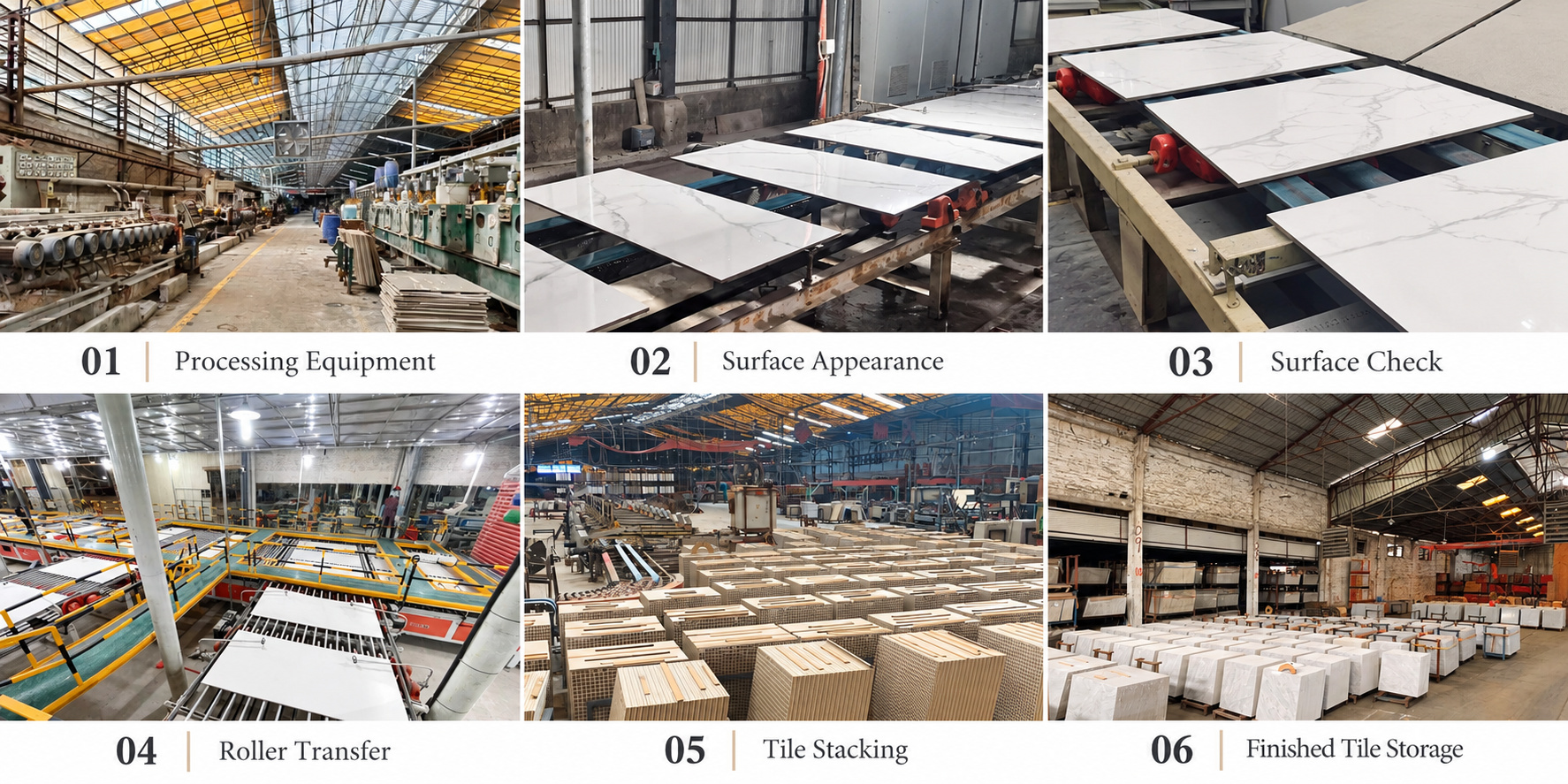 Sorting and Production Inspection
Finished tiles are sorted and checked against the requirements agreed for the order. Inspection may cover dimensions, visible surface defects, shade, batch identification and packing.
The approved reference helps align appearance expectations, including any intentional variation. It does not replace required performance testing. Buyers needing technical reports should identify the product, required properties and destination requirements before order approval.
Our tile sorting and production inspection page outlines the related checks. Inspection criteria and any additional testing are confirmed for the specific product.
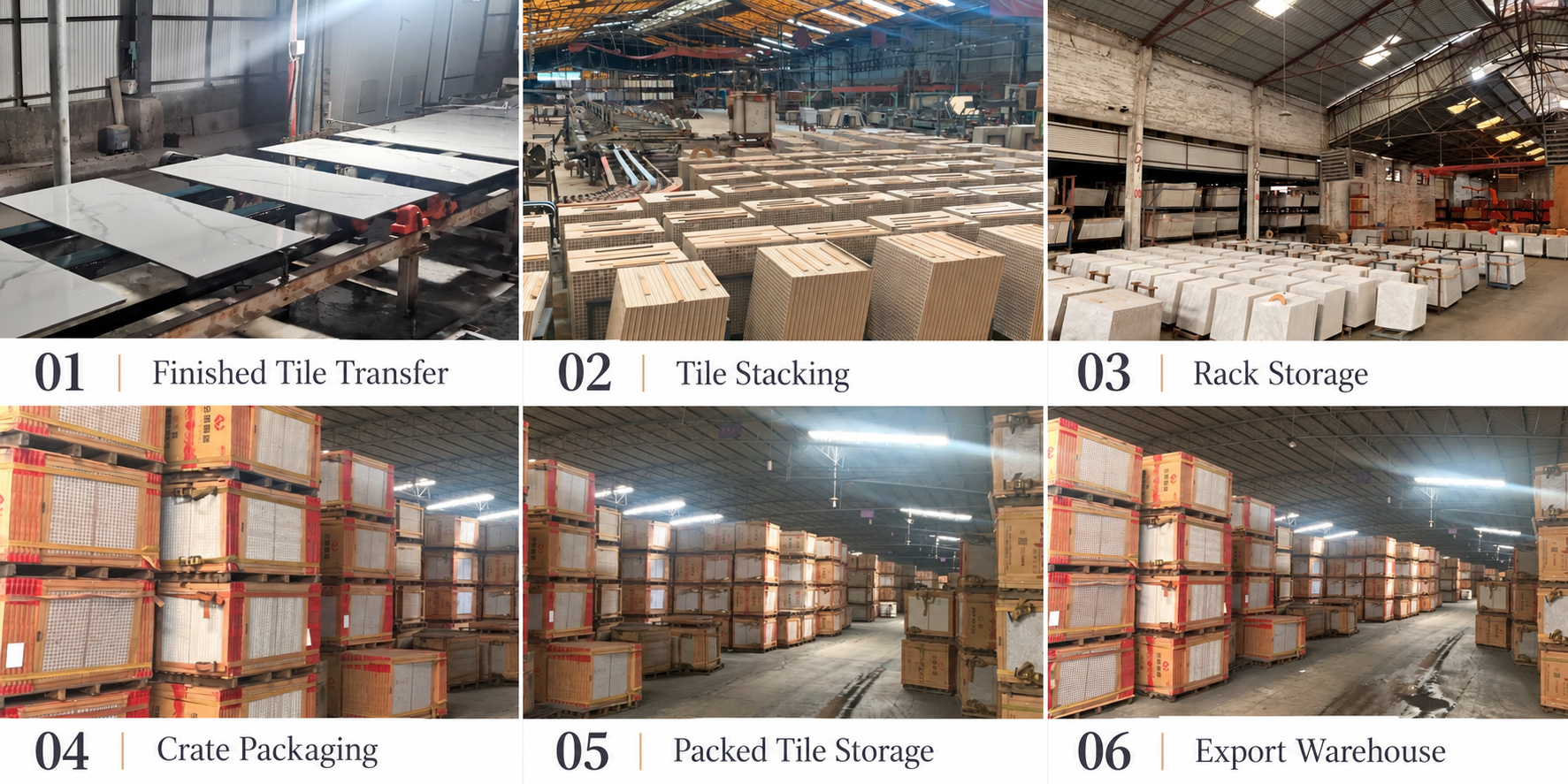
Packing and Export Preparation
Packing preparation brings the product and order information together. Pieces per carton, labels, protective materials and pallet requirements are reviewed against tile dimensions, thickness and destination handling needs.
For mixed orders, product references and batch details should remain identifiable through packing and dispatch. Branded carton artwork and shipping marks require approval before use.
Carton quantities, packed weights and pallet dimensions are confirmed for the actual order. Shipment is arranged according to the agreed commercial and shipping terms.
 Confirm Your Production Requirements
Send tile category, dimensions, thickness, finish, quantity per design, intended application and destination. Include reference samples, technical requirements, packaging instructions and the required delivery window.
For standard tiles, the typical planning MOQ is around 300–500 m² per design. Mass production typically takes around 25–40 days after order details and any required sample are approved.
Non-standard specifications, development work and production availability may affect these arrangements. We review the complete brief before confirming the applicable quantity, schedule and packing plan.