
Match Tile Dimensions to Your Purchasing Requirements
Tilvanta Ceramics reviews tile sizes and thicknesses for importers, distributors, building-material wholesalers and project buyers. Options are assessed across ceramic floor tiles, ceramic wall tiles, porcelain floor tiles and ceramic mosaic tiles.
Start with the intended application, preferred dimensions and quantity per design. We check suitable existing specifications before assessing non-standard requests. Size availability depends on the selected product, tile body and surface finish; a dimension available in one collection may not be available in another.
Confirm Nominal Size, Thickness and Edge Details
A purchasing specification should identify length, width, thickness and edge requirements. Nominal size describes the product format, while the agreed working dimensions and tolerances provide the reference for order inspection. Confirm these details before comparing quotations or approving a product.
For coordinated wall and floor selections, specify whether dimensions must align across different products. Matching nominal sizes alone does not establish matching working dimensions.
Mosaic requests should distinguish individual piece dimensions from overall sheet dimensions. Include joint spacing and sheet configuration where these affect the required layout.
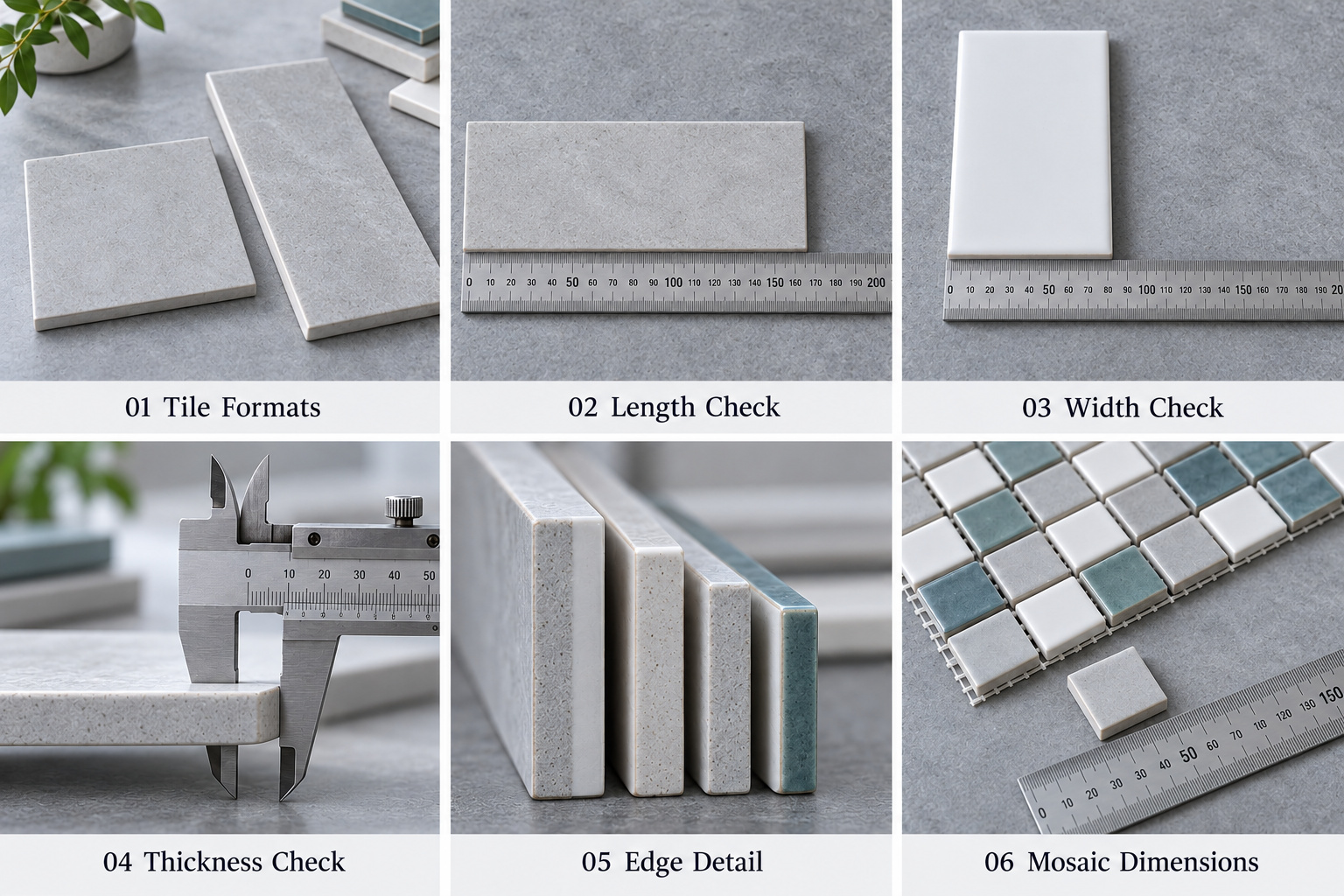 Review Thickness Against the Selected Product
Thickness must be considered together with tile body, format and intended application. A thicker tile should not automatically be treated as suitable for a particular load or installation condition. Share any project specification or required performance documentation so product suitability can be reviewed separately.
Where tiles meet adjacent materials, provide the required tile thickness and any installation constraints. Approval should distinguish the tile itself from the complete installed floor or wall build-up.
If your requirement also involves changing the ceramic or porcelain body, review the relevant tile body and material options before confirming the specification.
Assess Non-standard Sizes Before Sample Approval
Non-standard dimensions require a feasibility review. Depending on the product, a request may involve a different forming or finishing route rather than a simple change to an existing item. We assess the proposed dimensions, thickness, edge condition and quantity before confirming availability.
Provide a dimensioned drawing or clearly marked reference where exact proportions matter. Identify essential requirements separately from preferences that can be matched with existing products.
Through sample development and approval, confirm whether the supplied sample represents the requested dimensions, the surface finish, or both. A small finish sample does not establish full-size dimensional approval.
Agree Measurement and Packing Requirements
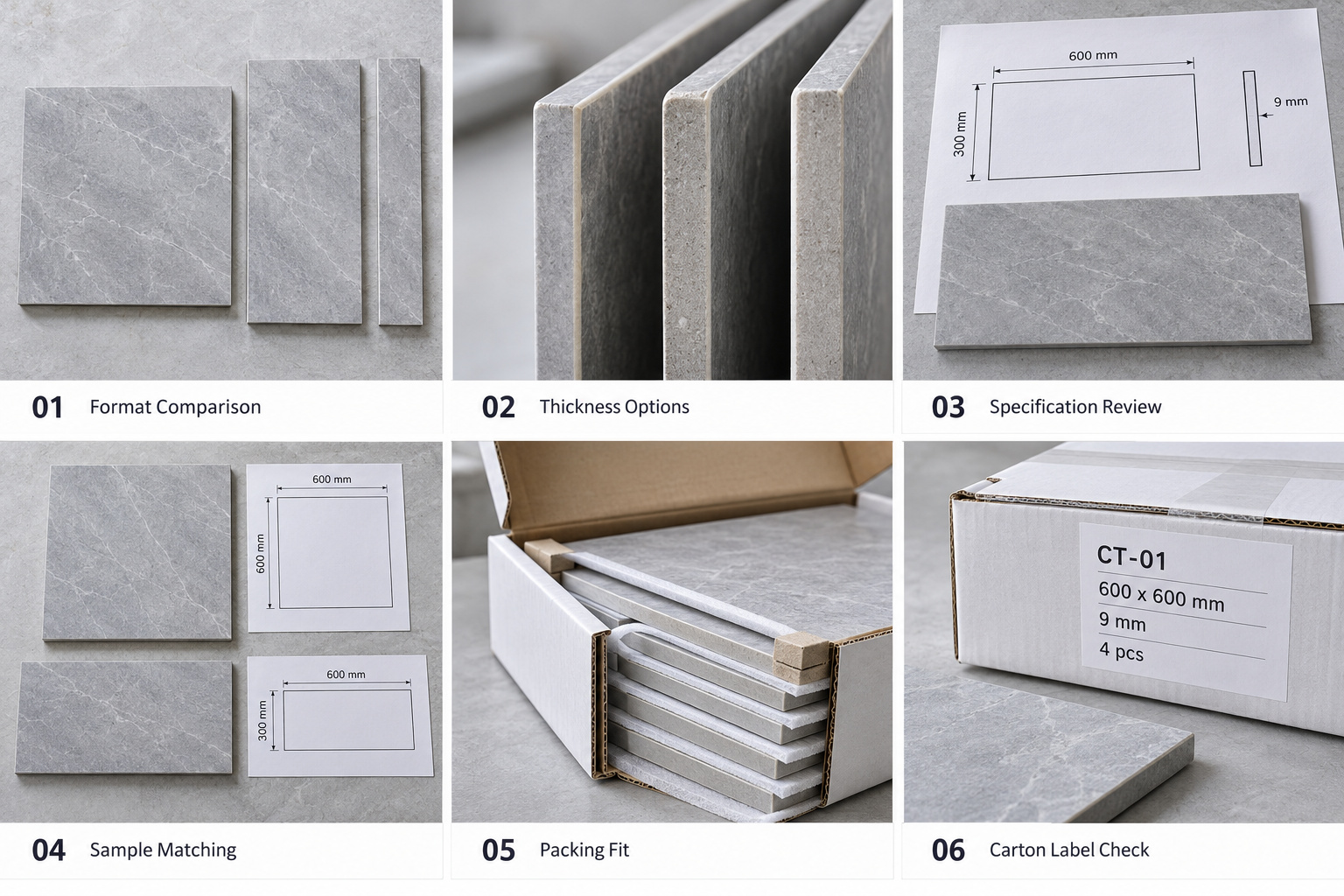
Before production, record the dimensions and inspection criteria in the approved specification. Checks should address the selected product and agreed tolerances. Our tile sorting and production inspection information explains how dimensional review connects with surface and batch checks.
Format and thickness also affect pieces per carton, packed weight and pallet planning. Confirm these details for the selected item rather than applying packing figures from another size.
 MOQ, Timing and Quotation Details
For standard tiles, the typical planning MOQ is around 300–500 m² per design. Final quantities depend on size, finish, production batch and order mix. Non-standard specifications may require different minimums.
Standard sample preparation typically takes 5–10 working days. Special-size samples require separate timing and cost confirmation. Mass production typically takes around 25–40 days after order details and any required sample are approved.
Send tile type, length, width, thickness, edge requirements, finish, area per design and destination. Include drawings and required tolerances so we can assess suitable options and prepare a quotation with clear specification and packing assumptions.